
Services
Crown Lengthening
We reshape excess gum tissue to expose more tooth, supporting healthier restorations and a more balanced smile.

Why choose us
Benefits of Crown Lengthening
More Even Smile
We gently reshape excess gum tissue so your teeth look balanced and proportionate.
Saves Damaged Teeth
Exposing more tooth structure lets us restore teeth that would otherwise be hard to crown.
Better Crown Fit
With our on-site lab, we can plan and craft restorations that seat securely after healing.
Comfort Options Available
We offer nitrous oxide and oral sedation to keep you relaxed during treatment.
No Referral Needed
You can come straight to us, and we accept major PPO plans, self-pay, and payment plans.
Maybe a back tooth broke off near the gumline and you were told there isn't enough tooth left to hold a crown. Or maybe you look in the mirror and see more gum than tooth when you smile, and your front teeth look short and stubby. Both situations have the same practical answer: crown lengthening, a procedure we perform here in Ocala to reshape gum tissue — and sometimes a small amount of underlying bone — so more of the natural tooth is exposed and usable.
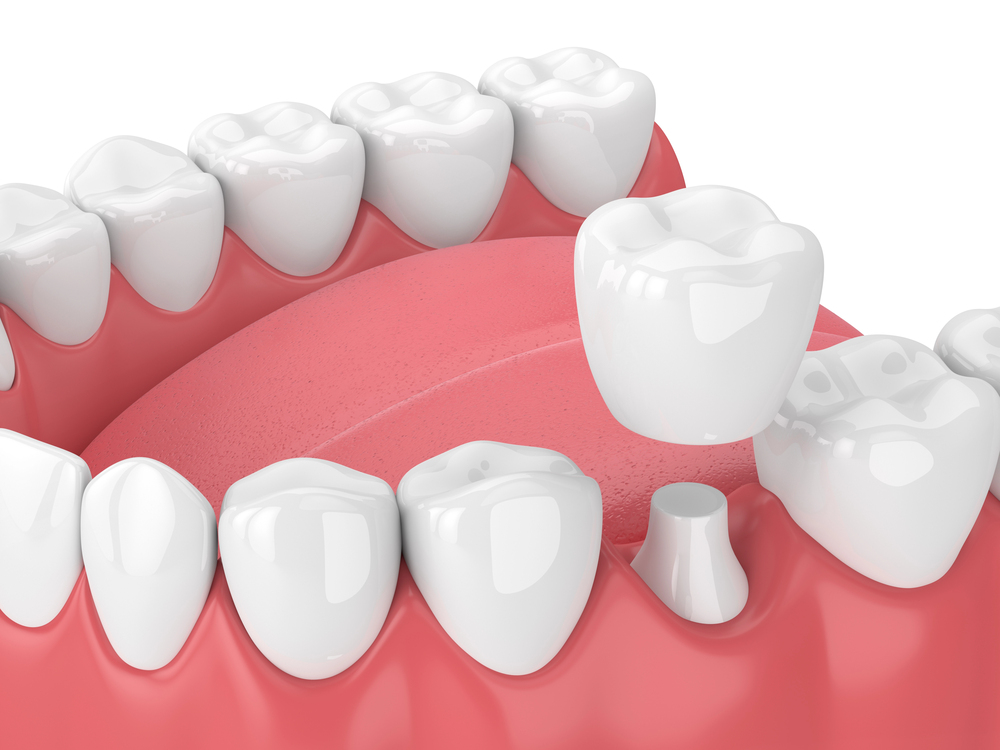
Crown lengthening is a periodontal procedure that adjusts the position of the gumline around one tooth or across several. The "crown" in the name refers to the visible portion of your tooth above the gums, not a dental cap. By carefully removing excess gum tissue and, when needed, contouring the bone ridge underneath, we create the healthy space a restoration needs to seat properly and seal against decay.
There are two broad reasons patients come to us for this treatment. The first is functional: a tooth has fractured below the gumline, decay has crept under the gum, or a crown keeps failing because there simply isn't enough structure for it to grip. Exposing more tooth gives a crown, onlay, or bridge something solid to hold onto. The second reason is cosmetic: a "gummy smile," where gum tissue covers too much enamel, or an uneven gumline that makes one tooth look shorter than its neighbor. In those cases, crown lengthening works much like gum contouring, redefining proportions so teeth appear longer and more balanced.
Good candidates are usually people already facing a restorative decision. If you've been told a tooth is "not restorable" because the break goes too deep, crown lengthening is often the step that changes that answer. We also recommend it before placing porcelain veneers or doing cosmetic bonding on front teeth, so the final result sits on a gumline that complements the new restorations rather than fighting them.
Healthy gums matter before we begin. If you have active gum disease, we typically treat that first with scaling and root planing or other periodontal care, because reshaping tissue that's inflamed and infected won't hold up. We'll take x-rays, measure the gum pockets, and look at the bone level around the tooth to decide whether tissue alone needs adjusting or whether bone contouring is also required. That distinction affects how long the procedure takes and how the area heals.
A few things worth knowing as you consider it:
- The procedure is done with local anesthetic, and nitrous oxide or oral sedation is available if dental work makes you anxious
- We also offer laser dentistry, which can be useful for certain soft-tissue reshaping
- Treatment may involve one tooth or be done across several teeth to keep the gumline even
- Crown lengthening is usually a step toward a crown, veneer, or other restoration rather than an end point on its own
- Our office treats patients of all ages and accepts periodontal patients without a referral
Healing, Aftercare, and What Results Look Like
Expect some tenderness and swelling for the first few days. We'll give you specific instructions on rinsing, brushing around the site, and what to eat — generally softer foods at first, avoiding anything crunchy or sharp near the treated area. Cold compresses help in the first day or two, and we'll discuss pain management that's appropriate for you.
Gum tissue needs time to settle into its new position before final restorations go on. Depending on whether bone was reshaped, that can mean waiting several weeks so the gumline is stable and the margins of your new crown or veneer land exactly where they should. We'll schedule follow-up visits to check healing. Once everything has matured, the restorative work happens — and because we have an on-site dental lab, crowns and other restorations can often be completed efficiently without long waits between appointments.
Paying for Treatment and Getting Started
We accept all major PPO insurance plans and file periodontal claims as a general practice, and many plans contribute toward crown lengthening when it's needed to restore a tooth. We're glad to help you understand your coverage before treatment begins so there are no surprises. Self-pay and cash patients are welcome, and flexible payment plans are available if you'd rather spread the cost out — especially when crown lengthening is part of a larger restorative or cosmetic plan.
Dr. Hussein Salifu and Dr. Marco Geris see patients from Ocala, Belleview, Silver Springs, Summerfield, The Villages, Dunnellon, Lady Lake, Marion Oaks, and the surrounding Marion County communities, and our practice has cared for this area for more than 30 years. If a tooth has broken down near the gumline or your smile shows more gum than you'd like, give us a call and let's take a look together.
The process
What to expect
- 1
Consultation And Planning
We examine your gums, bone, and teeth to map out exactly how much tissue to reshape.
- 2
Crown Lengthening Procedure
We comfortably contour the gum and bone to expose the right amount of healthy tooth.
- 3
Healing And Restoration
We check your healing and then complete any crown or restoration you need.