
Crowns in The Villages
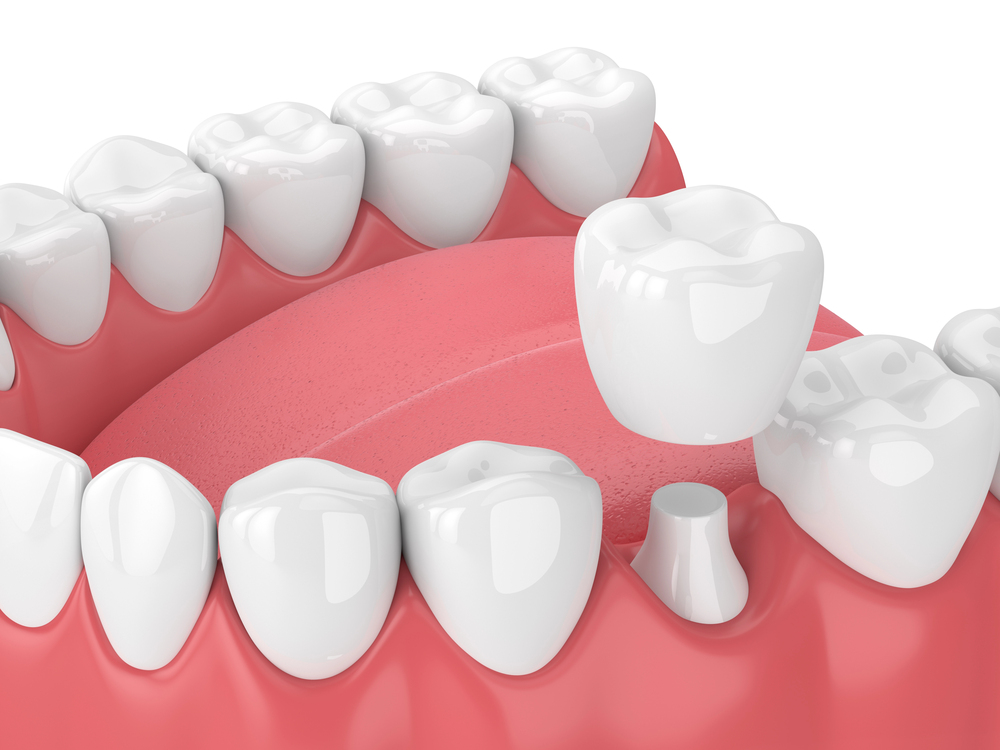
A cracked molar, a tooth worn thin from years of grinding, or a large old filling that keeps chipping away — these are the situations that bring most of our patients from The Villages in for a crown. A crown is a custom-made cap that covers the entire visible portion of a tooth, restoring its shape, strength, and appearance in one piece. When a tooth has lost too much structure for a filling to hold up, a crown takes over the job of chewing and protects what's left of the natural tooth underneath.
We've been restoring teeth in this part of Central Florida for over 30 years, and crowns remain one of the most dependable tools we have. Think of a filling as a patch and a crown as a helmet. A patch works when the damage is contained. Once a crack runs through a cusp, or a tooth has been hollowed out by decay or a root canal, the remaining walls flex under pressure and eventually split. A crown wraps the tooth and holds everything together so that flexing stops.
For patients coming to us from The Villages, crowns show up in a wide range of situations. Some are finishing root canal therapy — on a molar, premolar, or front tooth — and need the tooth sealed and reinforced afterward. Others have broken a tooth on something unexpected and come in as an emergency appointment. We also place crowns on dental implants to complete a tooth replacement, and use them as anchors for bridges that span a gap. In full mouth reconstruction and full mouth rehabilitation cases, crowns are often part of rebuilding bite height and function across many teeth at once.
Good candidates are people whose tooth still has a healthy root and enough structure to support a cap. We start with a dental exam and imaging to confirm that. If decay has reached the nerve, root canal therapy comes first. If gum tissue sits too high over the broken edge, a crown-lengthening procedure can expose enough tooth to hold the restoration — that's something we handle in-house. If the tooth can't be saved, we'll say so plainly and talk through extraction and tooth replacement options rather than crowning something that won't last.
Here's what the process looks like from your side of the chair:
- An exam, X-rays, and a conversation about what's happening with the tooth and what your options are
- Numbing, then careful shaping of the tooth so the crown fits without bulk
- A digital or physical impression that captures the tooth and how it meets its neighbors
- Fabrication of the crown, with shade matched to your surrounding teeth
- Fitting, bite adjustment, and bonding the crown permanently into place
Same-Day Crowns and the Drive from The Villages
Our on-site dental lab is the single biggest convenience factor for patients traveling to us from The Villages. Because we fabricate crowns in our own building rather than shipping impressions out to an outside lab, many crowns can be completed in one visit. That means no temporary crown to baby for two weeks, no worrying about it coming loose over dinner, and no second trip.
That matters for anyone making a drive. We try to group appointments efficiently, so if you need an exam, a cleaning with our hygienist, and crown work, we'll look at how to combine visits where it's clinically appropriate. We see all ages, adults and children alike, and we accept patients without a referral across our restorative and specialty services. Nitrous oxide and oral sedation are available for patients who feel uneasy in the chair.
Living With Your Crown
For the first day, chew on the other side while the bonding fully sets and the numbness wears off. After that, treat the crown like a natural tooth: brush twice daily, floss around it carefully by sliding the floss out sideways rather than snapping it up, and keep your regular cleaning and exam schedule. The crown itself won't decay, but the natural tooth and gumline at its margin still can.
Hard ice, popcorn kernels, and fingernail biting are the usual culprits behind chipped restorations. If you grind or clench at night, a custom night guard is worth discussing — and if jaw clicking, limited movement, or jaw-related headaches are part of the picture, we evaluate and treat TMJ disorders as well.
Insurance, Self-Pay, and Payment Plans
We accept all major PPO insurance plans and file claims as a General Practitioner. Many plans cover a meaningful share of crown treatment, and our team will review your benefits before we begin so you know where you stand.
We also welcome self-pay and cash patients, and we offer flexible payment plans so cost doesn't force you to postpone care on a tooth that's actively breaking down. If you're in The Villages and something feels cracked, sharp, or sensitive, call us — we offer emergency appointments and would rather look at it early than after it splits.