
Crowns in Oxford
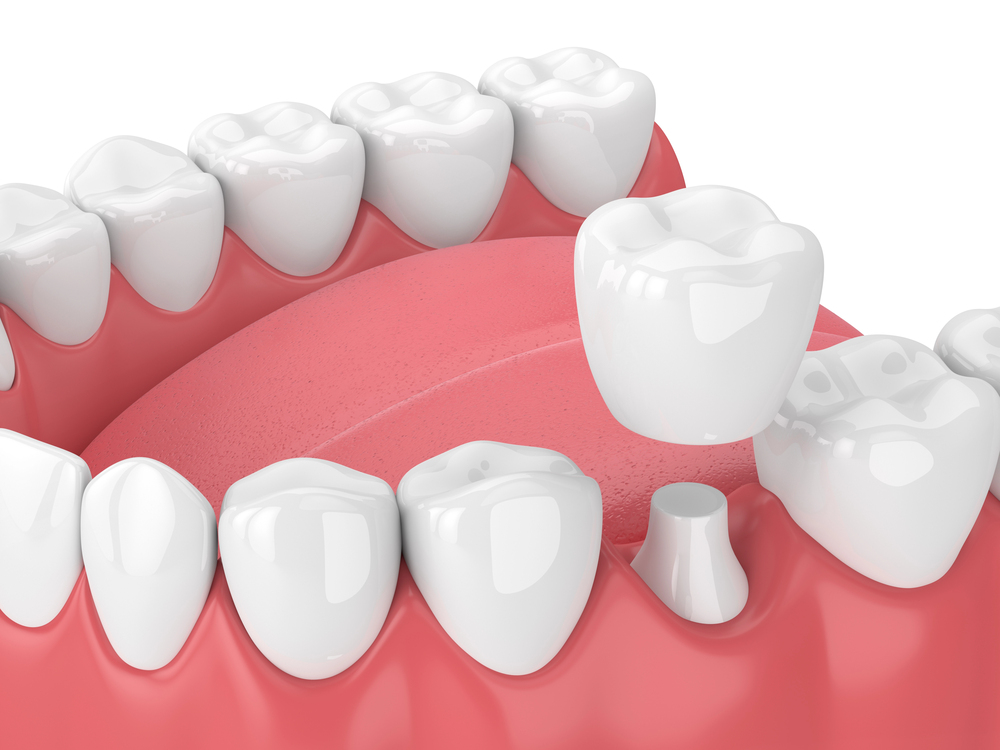
A cracked molar on a Sunday afternoon, a large old filling that finally gives way while you're eating, a root canal that left a tooth strong on the inside but fragile on the outside — these are the moments that bring Oxford patients to our chairs asking about crowns. We hear the same question almost every time: will this take weeks, and will I be walking around with a temporary the whole time? Because we keep a dental lab on site, the answer is often far simpler than people expect.
A dental crown is a custom-made cap that covers a tooth entirely, from the gumline up, restoring its shape, strength, and appearance. When a tooth has lost too much structure for a filling to hold reliably, a crown takes over the job of biting and chewing while protecting what remains of the natural tooth underneath. It's one of the most common restorative treatments in general dentistry, and it's a cornerstone of the restorative and cosmetic work we've provided for more than 30 years.
Crowns come up in a wide range of situations. We place them on teeth that have fractured or cracked, on teeth worn down by grinding, on teeth with fillings so large there's little tooth left to support them, and on teeth that have had root canal therapy and need reinforcement. Crowns also top dental implants and serve as the anchors for bridges that replace missing teeth. For Oxford patients pursuing a broader plan — full mouth rehabilitation, implant-supported restorations, or cosmetic smile design — crowns are frequently part of the blueprint.
Your first visit begins with a dental exam and imaging so we can see exactly what's happening inside and around the tooth. Sometimes the answer is straightforward: the tooth is sound at the root and simply needs coverage. Other times we find decay reaching the nerve, in which case root canal therapy comes first, or gum tissue sitting too high on the tooth, which may call for a crown-lengthening procedure before a crown can fit properly. Having general dentistry, endodontics, periodontics, and prosthodontics capabilities under one roof means Oxford patients usually don't need to be sent elsewhere to get those steps done.
We'll also talk honestly about alternatives. Not every damaged tooth needs a crown — composite bonding, a filling, or an onlay may be enough in some cases, and we'd rather conserve natural tooth structure when it's reasonable to do so. If a tooth can't be saved, we'll walk you through extraction and tooth replacement options, including implants and bridges.
What the Crown Appointment Involves
Once we've confirmed a crown is the right choice, we numb the area and reshape the tooth so the crown will seat securely and fit comfortably against neighboring teeth. We then capture a detailed impression of the prepared tooth and your bite. That record goes to our on-site lab, which is what allows us to offer same-day crowns rather than sending work out and scheduling you to return weeks later.
Here's what Oxford patients can generally expect:
- A thorough exam and imaging before any treatment decision is made
- Local anesthetic for comfort, with nitrous oxide or oral sedation available if dental anxiety is a concern
- Tooth preparation and impressions in a single appointment
- A crown fabricated in our on-site lab, shaped and shaded to match your surrounding teeth
- Careful fitting and bite adjustment so the crown feels natural when you chew
We take the bite check seriously. A crown that sits even slightly high can cause soreness or jaw strain, so we adjust until everything meets evenly.
Caring for Your Crown and Keeping It Healthy
A crown doesn't decay, but the natural tooth and gum tissue beneath it absolutely can. Brush twice daily, clean between your teeth every day with floss or an interdental brush, and keep up with regular cleanings and exams with our hygienist. Most crown failures we see trace back to decay at the margin or gum disease — both of which routine preventive care catches early.
Protect the crown from forces it wasn't designed for. Avoid chewing ice or using your teeth as tools, and if you clench or grind at night, ask us about a night guard. Patients dealing with jaw clicking, limited movement, or jaw-related headaches can also be evaluated for TMJ concerns, since untreated grinding puts every restoration at risk.
Insurance, Payment, and Scheduling from Oxford
We accept all major PPO insurance plans and file claims as a General Practitioner. We also welcome self-pay and cash patients, and we offer flexible payment plans so a needed crown doesn't have to wait.
We see patients of all ages, adults and children alike, and we offer emergency dental appointments — including same-day emergency visits — when a tooth breaks unexpectedly. If you're in Oxford and dealing with a damaged tooth, call us and we'll find a time that works.