
Onlays in McIntosh
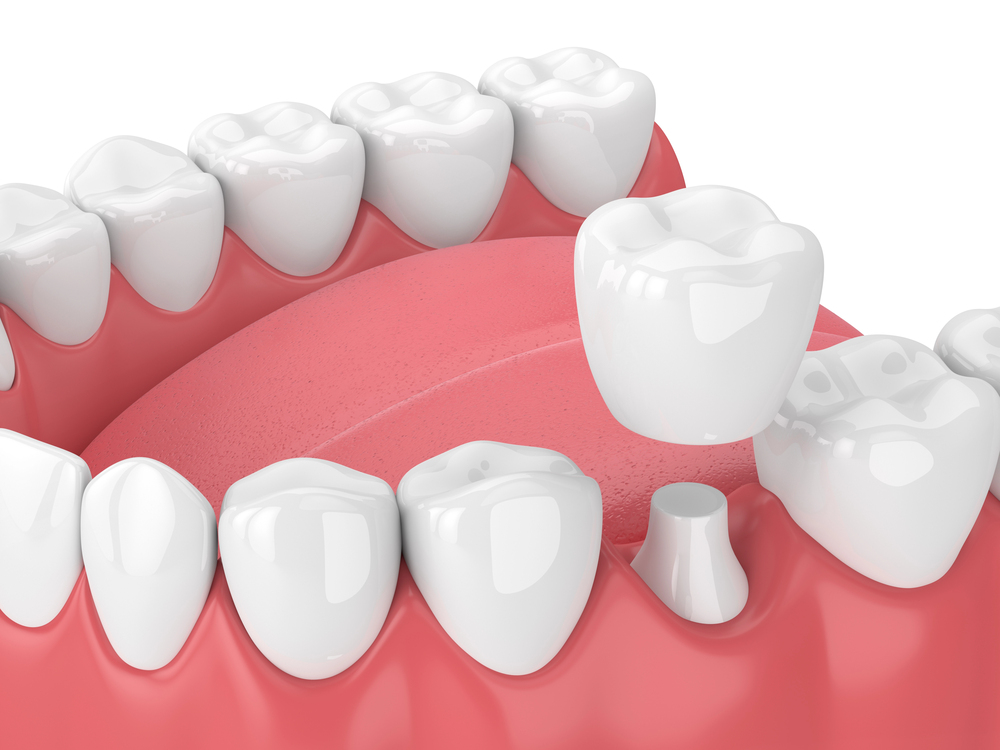
When a back tooth has a crack, a failing old filling, or a cusp that has broken away, there's often a middle path between a simple filling and a full crown. That middle path is an onlay — a custom-made restoration that rebuilds the chewing surface and one or more cusps of a molar or premolar while leaving the healthy tooth structure around it untouched. For patients in McIntosh who want to keep as much of their natural tooth as possible, it's a conservative, durable option worth understanding before committing to a larger restoration.
An onlay is bonded onto the top of a tooth after we remove decay or old filling material and shape the remaining structure. Unlike a filling, which is packed into the tooth and hardened in place, an onlay is fabricated to precise measurements and then seated as a single solid piece. Unlike a crown, which covers the entire tooth down to the gumline, an onlay covers only the damaged portions — typically the biting surface and the cusps that need reinforcement.
That distinction matters most on teeth that take heavy chewing loads. A large filling in a molar can leave thin walls of enamel that flex and eventually fracture. An onlay distributes force across the tooth instead of wedging it apart, which is why we often recommend one when a filling has grown too wide to be reliable but the tooth is otherwise sound. We serve McIntosh patients from our Ocala office, where our on-site dental lab lets us handle fabrication in-house rather than shipping cases out and asking you to wait.
Most people who need an onlay fall into a few recognizable situations. The tooth may have a crack we've been monitoring, a cusp that snapped off while chewing, a decades-old amalgam filling that is leaking at the margins, or new decay around the edge of an existing restoration. Sometimes a tooth that has had root canal therapy needs reinforcement, and an onlay can provide that coverage without removing additional healthy structure.
Candidacy depends on what remains. If enough solid tooth is left to support and bond a restoration, an onlay is usually on the table. If decay extends well below the gumline, or if too little tooth structure remains to hold anything securely, a crown or another approach may serve you better — and we'll tell you that plainly. Our dentists, Dr. Hussein Salifu and Dr. Marco Geris, evaluate each tooth individually rather than applying a one-size-fits-all rule. Active gum disease or untreated decay elsewhere is typically addressed first so the finished onlay has a healthy foundation.
- Preserves more natural tooth structure than a full crown
- Reinforces cusps weakened by cracks or large old fillings
- Custom-made to fit your bite and the contours of the tooth
- Seals the tooth against bacteria at the margins
- Supported by our on-site lab, so fabrication stays under our roof
What the Appointment Involves
The process begins with an exam and imaging to confirm the extent of damage and rule out problems that would change the plan, such as a crack reaching the nerve. We discuss findings with you before any work starts. Once you're ready, we numb the area, remove decay and any failing filling material, and shape the tooth so the onlay has clean, well-defined edges to bond against.
Next we capture the detailed measurements used to make the restoration, including how your teeth come together when you bite. The onlay is then fabricated and checked for fit, contact with neighboring teeth, and bite alignment. Adjustments are made until it sits correctly, and the restoration is bonded into place and polished. Because an onlay reshapes a chewing surface, we take time verifying the bite — a high spot can cause soreness, so this step is not rushed.
Aftercare, Payment, and Scheduling from McIntosh
Afterward, mild sensitivity to temperature or pressure for a short period is common. Brushing twice daily, flossing around the margins, and keeping regular cleanings with our hygienist protect the bond and the tooth beneath it. If you clench or grind at night, ask us about a night guard — grinding forces are hard on any restoration. Avoid chewing ice or unusually hard objects on the treated side.
We accept all major PPO insurance plans and welcome self-pay patients, with flexible payment plans available for treatment that needs to be spread out. Our team will review coverage and estimated costs before you commit. McIntosh patients are part of the Marion County community we've served for more than 30 years, and if an onlay fails or a tooth breaks unexpectedly, we offer emergency appointments rather than leaving you waiting.