
Bridges in Lady Lake
A missing tooth rarely stays a simple cosmetic issue. The teeth on either side begin to drift toward the gap, the opposing tooth can drop down over time, and chewing shifts to one side of the mouth. For our patients from Lady Lake, that often shows up as food getting trapped, a bite that feels "off," or avoiding certain foods altogether. A dental bridge closes that gap with a fixed restoration that stays put — no removing it at night, no soaking cup on the counter.
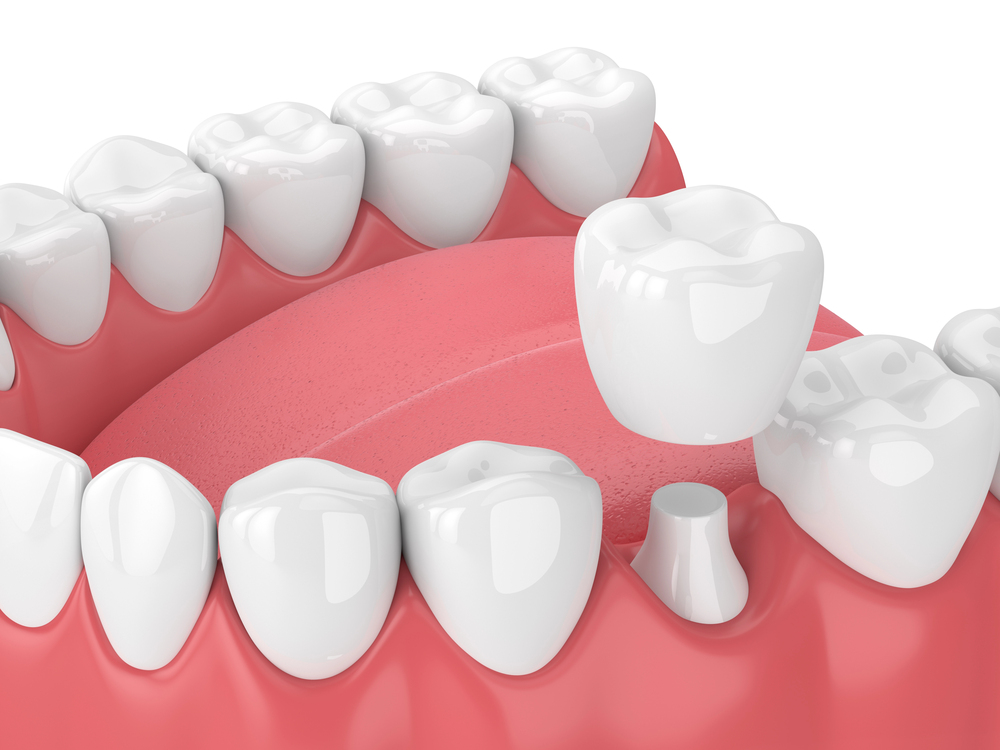
A bridge is a set of connected replacement teeth that spans an empty space. The artificial tooth in the middle is called a pontic, and it is anchored by crowns placed on the healthy teeth on either side, or by dental implants. Once it is cemented or secured in place, it functions as part of your bite. You brush it, chew with it, and speak with it the same way you would your natural teeth.
We offer both traditional bridges supported by neighboring teeth and implant-supported bridges that rest on implants placed in the jaw. The right choice depends on how many teeth are missing, the condition of the teeth beside the gap, and the amount of bone available. If the neighboring teeth already need crowns, a traditional bridge can solve two problems with one restoration. If those teeth are healthy and untouched, an implant-supported bridge may be the better long-term option because it does not require reshaping them.
Most adults missing one tooth or several teeth in a row are candidates. We evaluate the supporting teeth for decay, cracks, and gum health first, because a bridge is only as stable as what holds it. If gum disease is present, we treat that first with scaling and root planing or periodontal therapy. If a supporting tooth has deep decay or infection, root canal therapy may come before the bridge. Where bone volume is thin and implants are the goal, bone grafting or sinus lift surgery can build the foundation needed.
Here is why Lady Lake patients commonly choose a bridge:
- It fills the gap with a fixed restoration you never take out
- It restores comfortable chewing on both sides of the mouth
- It helps keep neighboring teeth from tilting into the empty space
- It supports clearer speech and a more even smile line
- It can be completed without surgery when a traditional bridge is used
Not every situation calls for a bridge. Some patients are better served by a single implant, a partial denture, or an implant-supported denture, and we will tell you plainly when that is the case.
What the Process Looks Like
Your first visit is an exam and a conversation. We take images, check the health of the supporting teeth and gums, review your bite, and talk through what you want from the result. We also screen for problems that could undermine the restoration — grinding, jaw joint issues, or untreated decay elsewhere. If clenching is part of the picture, a night guard or TMJ therapy may be recommended alongside the bridge.
For a traditional bridge, we prepare the anchor teeth, take impressions, and fit you with a temporary so you leave with a complete smile. Our on-site dental lab is a real advantage here: fabrication happens in our building rather than being shipped out, which keeps the process tight and lets us make adjustments quickly. At the fitting appointment we check the fit, contacts, and bite, adjust until it feels natural, and cement it in place. Implant-supported bridges follow a longer timeline that includes implant placement and healing before the final restoration is attached.
Caring for Your Bridge
Daily care is straightforward but specific. You brush normally and clean underneath the pontic using floss threaders, super floss, or a water flosser — this step matters most, because debris under the bridge is the usual cause of trouble. Our hygienists show you the technique in the chair and will check it at each cleaning.
Regular exams and cleanings protect your investment. We monitor the margins of the crowns, the gum tissue around the bridge, and the opposing teeth. For implant-supported bridges, we also provide implant maintenance visits.
Insurance, Payment, and Getting Started
We accept all major PPO insurance plans, welcome self-pay and cash patients, and offer flexible payment plans so treatment can be staged in a way that works for your budget. We will review the estimate with you before anything begins.
We have practiced general, restorative, and cosmetic dentistry for over 30 years, and Dr. Hussein Salifu and Dr. Marco Geris see patients of all ages. Call our Ocala office to schedule your Lady Lake bridge consultation.