
Bridges in Fort McCoy
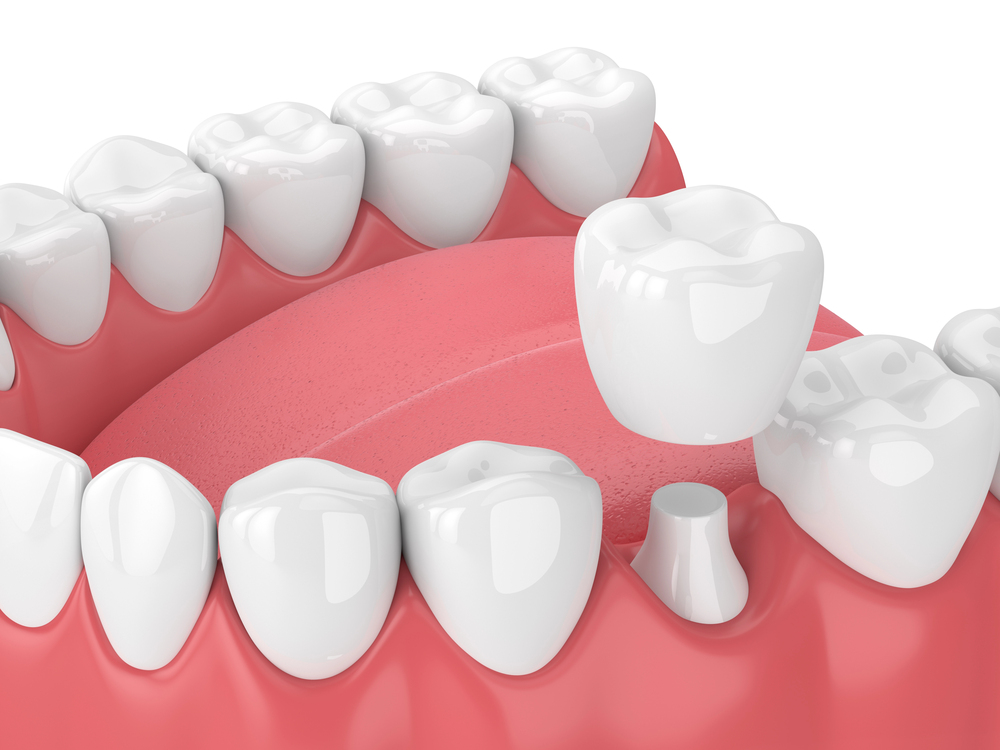
A missing tooth changes more than your smile. It changes how you chew a sandwich, how you pronounce certain words, and over time, how the rest of your teeth sit in your mouth. For many of our Fort McCoy patients, that single gap is what finally prompts a call — and a dental bridge is often the straightforward, fixed solution that brings everything back into working order.
A bridge is a fixed restoration that fills the space left by one or more missing teeth. It's made up of a replacement tooth (or teeth) anchored on either side, so the gap is literally "bridged." Unlike a removable partial denture, a traditional bridge stays put. You don't take it out at night, and you don't think about it during the day. It becomes part of your bite.
The anchors can come from two sources. A conventional bridge uses the healthy teeth on each side of the gap, which we shape and cover with crowns. An implant-supported bridge uses dental implants placed in the jawbone as the foundation instead, which is often the better route when the neighboring teeth are healthy and we'd rather not alter them, or when several teeth in a row are missing. We provide both at our practice, so the conversation starts with your mouth rather than with a predetermined plan.
Most people with a healthy foundation are candidates. During your first visit, we examine the area, look at the condition of the surrounding teeth, check your gums, and review X-rays to see what's happening below the gumline. Gum health matters a great deal here — a bridge needs stable support, so if we find gum disease, we'll address that first with treatment such as scaling and root planing or periodontal care before moving forward.
Bridges tend to make sense for a wide range of situations we see in Fort McCoy patients: a tooth lost to a deep fracture, an extraction that was never followed up on, a long-standing gap that's starting to let the opposing tooth drift downward, or a failing older restoration that needs to be replaced. Some patients come to us after an emergency visit for a traumatic injury; others simply decide, after years, that it's time. If a tooth is cracked but salvageable, root canal therapy and a crown may be the better answer, and we'll tell you so. If bone volume is limited for an implant-supported bridge, bone grafting or a sinus lift may be part of the plan.
What the Process Looks Like
For a conventional bridge, treatment usually unfolds over a couple of appointments. We numb the area, carefully reshape the two anchor teeth so crowns will fit over them, and take detailed impressions or digital scans of your bite. Because we have an on-site dental lab, much of the fabrication work happens right here rather than being shipped out — a real convenience for Fort McCoy patients who'd rather not make extra trips into town. When the bridge is ready, we check the fit, the color match, and the way your teeth come together, adjust as needed, and cement it in place.
An implant-supported bridge follows a longer timeline, since the implants need time to integrate with the bone before the final restoration is attached. We place implants here in our office and handle the restorative work as well, so your care stays under one roof from start to finish.
- A thorough exam, X-rays, and a review of your options before anything is decided
- Local anesthetic for comfort, with nitrous oxide or oral sedation available if you'd like it
- Shaping of anchor teeth and precise impressions or scans
- Lab fabrication supported by our in-house lab
- A fitting appointment to adjust bite, fit, and shade before final placement
Caring for Your Bridge Afterward
A bridge is cleaned much like natural teeth, with one addition: you'll need to clean underneath the replacement tooth where it meets the gum. We'll show you how, using floss threaders, interdental brushes, or a water flosser — whichever you'll actually use. Brushing twice a day and keeping the anchor teeth and gums healthy is what protects your investment over the long haul.
Regular cleanings and exams with our hygienist let us check the margins, the bite, and the surrounding gum tissue. If you grind your teeth, a night guard can reduce stress on the restoration.
Insurance, Payment, and Getting Started
We accept all major PPO insurance plans and welcome self-pay patients. Flexible payment plans are available, and we'll go over estimated coverage with you before treatment begins so there are no surprises.
Our team has cared for Fort McCoy families and neighbors across Marion County for more than 30 years, treating patients of all ages. If you're ready to close a gap, give us a call and we'll find a time that works.