
Onlays in Dunnellon
A cracked molar or a large old filling that keeps chipping puts you in an awkward spot: the tooth is too damaged for a simple filling, but it still has plenty of healthy structure worth saving. That middle ground is exactly where an onlay fits. For patients coming to us from Dunnellon, this conservative restoration is one of the most practical ways to rebuild a back tooth without reducing it down for a full crown — and with our on-site dental lab, we can often move through the process faster than many patients expect.
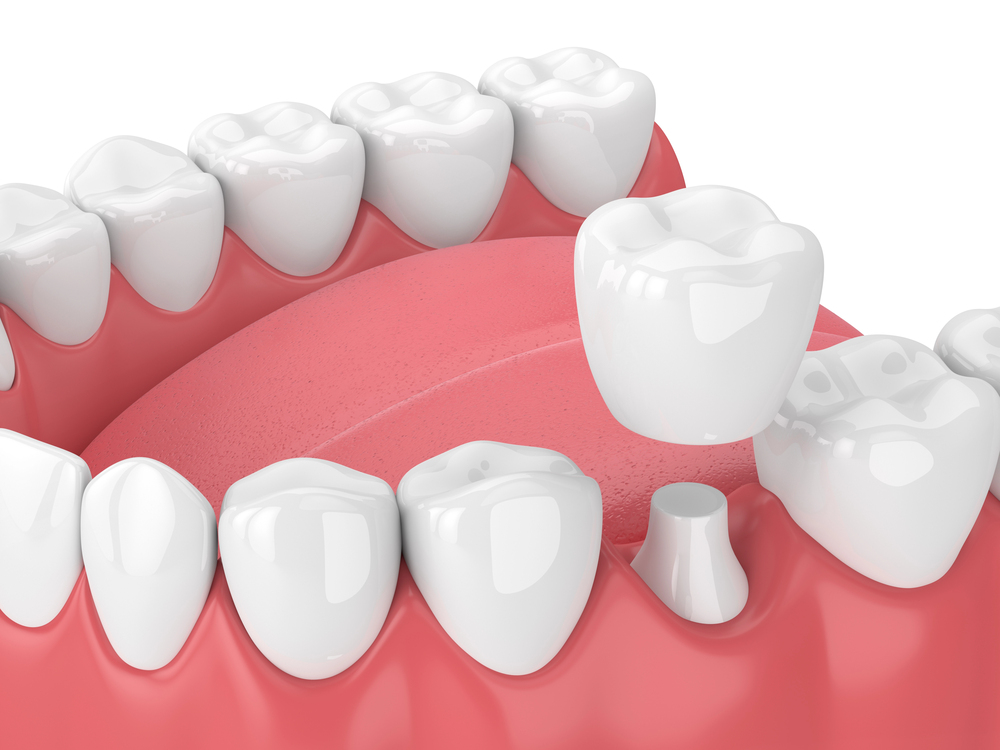
An onlay is a custom-made restoration that covers the chewing surface of a tooth, including one or more of the cusps — the raised points along the biting edge. Think of it as a precisely fitted cap for the damaged portion of the tooth, bonded into place. A filling is placed directly into a cavity and shaped by hand at the chair. A crown covers the entire tooth down to the gumline. An onlay sits between the two, replacing only what's broken or decayed while leaving the remaining healthy enamel and tooth structure intact.
That conservative approach matters more than it sounds. Natural tooth structure is stronger than anything we can bond to it, so preserving it supports the long-term health of the tooth. Onlays are most often used on molars and premolars, where chewing forces are highest and where large, failing silver fillings tend to leave thin, fracture-prone walls behind. We also use onlays as part of broader restorative plans — for example, rebuilding a tooth after root canal therapy, or restoring worn-down back teeth for patients being treated for TMJ-related clenching and grinding.
Most Dunnellon patients who ask about onlays fall into a few familiar categories. You might have a tooth that fractured on something hard, a decades-old amalgam filling that has expanded and cracked the surrounding tooth, or decay that reaches too wide for composite bonding to hold up under chewing pressure. In other cases, grinding has flattened or chipped the cusps of a molar over the years.
Candidacy comes down to how much healthy tooth remains. If the roots and surrounding structure are sound and enough wall is left to support a bonded restoration, an onlay is usually a strong option. If decay has reached the nerve, we may recommend root canal therapy first — something we handle in-house, including molar, premolar, and anterior cases, retreatments, and cracked-tooth evaluations. If too little tooth remains, a crown is the more predictable choice, and we'll tell you that directly rather than placing a restoration that won't last.
- Preserves healthy tooth structure compared to a full crown
- Restores full chewing strength to molars and premolars
- Custom-fabricated for an accurate bite and tight margins
- Seals the tooth against new decay at the treated surfaces
- A conservative alternative when a large filling is failing
- Supported by our on-site dental lab, which keeps fabrication in our hands
What the Appointment Involves
We start with an exam and imaging to confirm the extent of the damage and rule out nerve involvement or gum problems around the tooth. Once an onlay is the agreed plan, we numb the area and remove the decay, old filling material, and any unsupported enamel. The tooth is then shaped so the onlay has clean margins to bond against — a much more limited reduction than crown preparation requires.
Next we capture a detailed impression or scan of the prepared tooth and your bite. That information goes to our on-site lab, where the onlay is fabricated to match the contours of your tooth and the way your teeth come together. At the seating visit, we check fit, contacts with neighboring teeth, and bite alignment before bonding it permanently and polishing the margins. For patients who feel anxious about dental work, we offer nitrous oxide sedation and oral sedation options.
Aftercare, Payment, and Getting Here from Dunnellon
Expect some gum tenderness and brief temperature sensitivity for a few days. Brush twice daily and floss carefully around the onlay — the bonded margin is where new decay would start if plaque sits there. Avoid chewing ice or hard candy, and if you grind at night, a custom night guard protects your investment. We'll monitor the onlay at your regular cleanings and exams.
We accept all major PPO insurance plans, welcome self-pay patients, and offer flexible payment plans so cost doesn't delay care. Dunnellon families are welcome at any age, no referral needed, and we keep emergency appointments available for cracked or painful teeth. Our team in Ocala has cared for this region for over 30 years, and Drs. Salifu and Geris will walk you through every option before anything begins.