
Bridges in Oxford
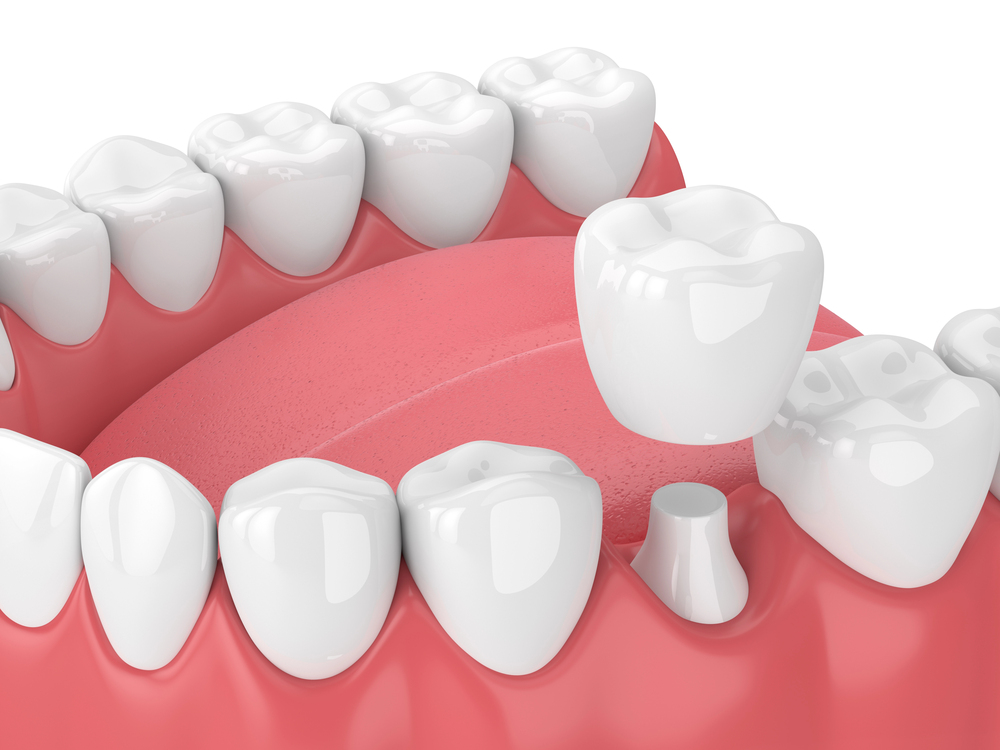
A tooth goes missing — maybe from a fracture, an old failing filling, or an extraction that couldn't be avoided — and suddenly chewing shifts to one side. Oxford patients tell us the same things: food gets trapped, the gap shows when they smile, and the neighboring teeth start to feel like they're drifting. A dental bridge is one of the most straightforward answers to that problem, and it's a restoration we plan, build, and place for patients from Oxford regularly at our Ocala office.
A bridge replaces one or more missing teeth by anchoring a replacement tooth — called a pontic — to support on either side of the gap. In a traditional bridge, that support comes from crowns placed over the healthy teeth bordering the space. Those crowns are cemented in place, so the whole restoration stays put. You don't take it out at night, and you don't adjust it the way you would a removable partial denture.
There's a second route as well. When the teeth next to a gap aren't suitable anchors, or when several teeth in a row are missing, an implant-supported bridge uses dental implants as the foundation instead of natural teeth. We place dental implants here, and we also handle bone grafting and sinus lift surgery when the jaw needs additional support before implants can go in. That means Oxford patients can have the evaluation, the implant placement, and the final bridge handled by the same team rather than being sent from office to office.
Bridges suit a wide range of situations. We see Oxford patients who lost a single molar years ago and are now noticing the opposing tooth over-erupting into the space. We see others who need a cracked, non-restorable tooth removed and want a plan for what replaces it before the extraction ever happens. And we see patients rebuilding larger portions of their bite, where bridges work alongside crowns, implants, or partial dentures as part of a full mouth rehabilitation.
Good candidacy usually comes down to the health of what's around the gap. The supporting teeth need enough structure to hold crowns, and the gums and bone underneath need to be healthy. If gum disease is present, we treat that first — scaling and root planing, periodontal maintenance, or more involved periodontal surgery and gum grafting when needed. If a supporting tooth has deep decay or an infected nerve, root canal therapy may come before the bridge. We'd rather address those issues up front than build a restoration on a questionable foundation.
Here's what a bridge typically does for patients:
- Restores chewing on the side where you've been avoiding food
- Keeps neighboring teeth from drifting or tilting into the open space
- Fills the visible gap so your smile looks complete again
- Stays fixed in place — no removal for cleaning or sleeping
- Distributes bite forces more evenly across the arch
What the Process Looks Like
Treatment starts with an exam and imaging so we can see the condition of the supporting teeth, the bone, and your bite. We'll go over whether a traditional bridge, an implant-supported bridge, or another option like a partial denture makes the most sense for your situation, and what sequence of appointments that involves.
At the preparation visit, we shape the supporting teeth so the crowns will fit over them and take impressions of the area. This is where our on-site dental lab matters for Oxford patients. Having the lab in our building shortens turnaround and keeps adjustments in-house instead of shipped out and back. If you'd like, nitrous oxide sedation or oral sedation is available to make longer appointments more comfortable. At the placement visit, we check the fit, the contacts with neighboring teeth, and how the bridge meets your opposing teeth, then make refinements before cementing it.
Caring for Your Bridge and Handling the Cost
Bridges need the same attention as natural teeth, plus one addition: cleaning underneath the pontic. We'll show you how to use floss threaders or interdental brushes to clear that space, since debris collecting there is what most often causes trouble down the road. Regular cleanings and exams with our hygienist let us check the margins of the crowns and the health of the gums around them.
We accept all major PPO insurance plans and file claims as a general practice, which includes implant and prosthetic work. Self-pay and cash patients are welcome, and we offer flexible payment plans so treatment can be spread out. We'll give you a clear breakdown of what's covered and what isn't before you commit.
Our practice has served this part of Central Florida for over 30 years, and Oxford patients are a regular part of our schedule — including those who need an emergency appointment when a tooth breaks unexpectedly.