
Snap In Dentures in Lady Lake
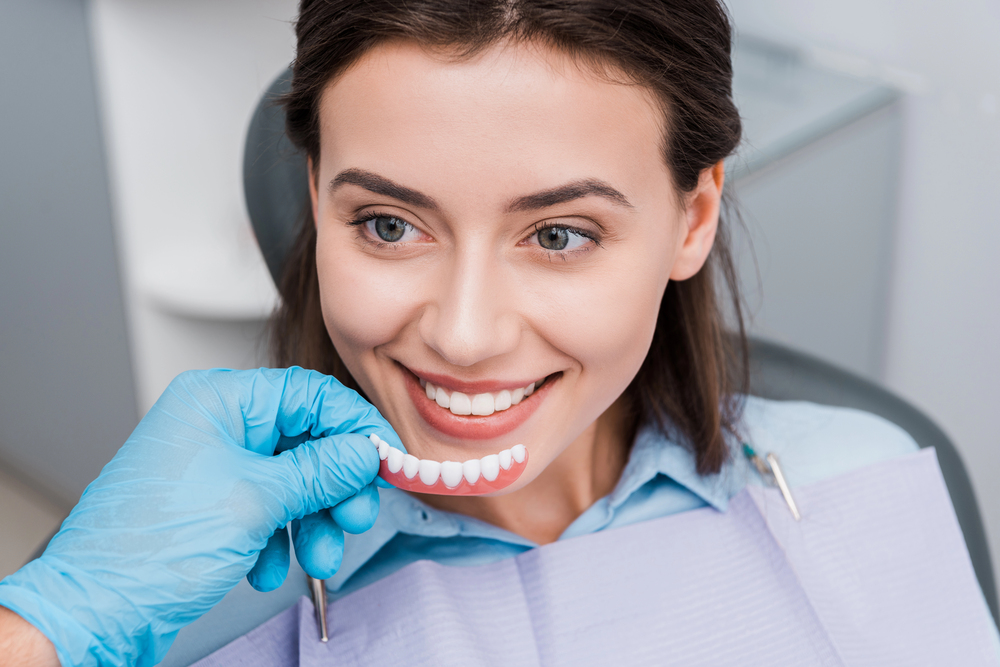
A denture that slips while you're eating corn on the cob or holding a conversation isn't just annoying — it changes what you order, how loudly you laugh, and how often you reach for adhesive. Snap-in dentures solve that problem mechanically. Instead of resting on the gums and relying on suction, the denture clicks onto dental implants placed in the jawbone, so it stays put until you take it out. For our patients from Lady Lake, it's one of the most practical upgrades we offer, and because we have an on-site dental lab, much of the work happens under our own roof.
A snap-in denture — also called an implant-supported overdenture — is a removable full or partial denture with attachments built into its underside. Those attachments snap onto a small number of implants, usually placed along the lower or upper arch. You still remove the denture for cleaning, but while it's in, it doesn't rock, lift at the back, or shift when you bite into something firm.
The difference from a conventional denture is stability and bite force. Because the implants anchor into bone, chewing pressure transfers through the implants rather than pressing the whole load onto gum tissue. That often means less sore-spot irritation and a lower-profile upper denture design. We also place fixed implant-supported bridges and full-arch implants for patients who never want to remove anything, so part of your first visit is simply comparing those paths honestly against a snap-in design.
Who Snap-In Dentures Help Most
We see Lady Lake patients arrive at this conversation from several different directions. Some have worn a complete denture for years and are tired of adhesive and of avoiding certain foods. Others still have a few failing teeth — cracked, loose from gum disease, or broken down past repair — and want a plan that handles extractions and replacement together. Still others have a partial denture that's lost its grip as neighboring teeth changed.
Candidacy depends mostly on bone. We evaluate the height and width of the jaw, your gum health, your bite, and any jaw joint symptoms before recommending implants. If bone volume is thin, bone grafting or sinus lift surgery can build a foundation first. If gum disease is active, we treat that with scaling and root planing or periodontal therapy before placing anything. Since we also handle extractions, root canals, and periodontal care in-house, we rarely have to send Lady Lake patients elsewhere mid-treatment.
- Dentures that lift, rock, or require adhesive throughout the day
- Difficulty chewing meats, raw vegetables, or crusty bread
- Several remaining teeth that are loose, cracked, or non-restorable
- An upper denture that covers the palate and dulls taste or triggers gagging
- A desire for a removable option that's easier to clean than fixed bridgework
The Process, Step by Step
It starts with an exam, imaging, and a conversation about what bothers you most. We map implant positions, review your medical history, and discuss comfort options — nitrous oxide or oral sedation are available if dental visits make you tense. If extractions are needed, we plan them alongside implant placement where appropriate.
Implant placement is a surgical appointment, followed by a healing period while the implants integrate with bone. During that time you wear a denture so you're never without teeth. Once healing is confirmed, we attach the connectors and fit your denture with its snap-in housings, then adjust the bite carefully. Our on-site lab shortens the back-and-forth here: fabrication, relines, and adjustments are made in our building instead of being shipped out, which matters when you're driving in from Lady Lake and want fewer trips.
Aftercare and Keeping It Comfortable
Snap-in dentures come out daily. You'll clean the denture, brush around each implant and its abutment, and keep the gum tissue healthy — our hygienists show you exactly how, including the small brushes that reach under the attachments. The nylon or rubber retention inserts inside the denture wear down with use and are replaced periodically; that's a quick, routine visit, not a repair.
We schedule implant maintenance appointments to check the attachments, assess bone and gum health around each implant, and refresh the fit. If the denture ever cracks or a tooth chips, we repair or replace it, often the same day thanks to the lab.
Insurance, Payment, and Getting Started
We accept all major PPO insurance plans and file claims as a general practice, and we welcome self-pay patients. Implant treatment often involves several phases, so we go over what your plan may cover and what it won't before you commit to anything.
Flexible payment plans let Lady Lake patients spread the investment out. No referral is required — call Ocala Dental Care and we'll get you in for an evaluation with Dr. Salifu or Dr. Geris.