
Snap In Dentures in The Villages
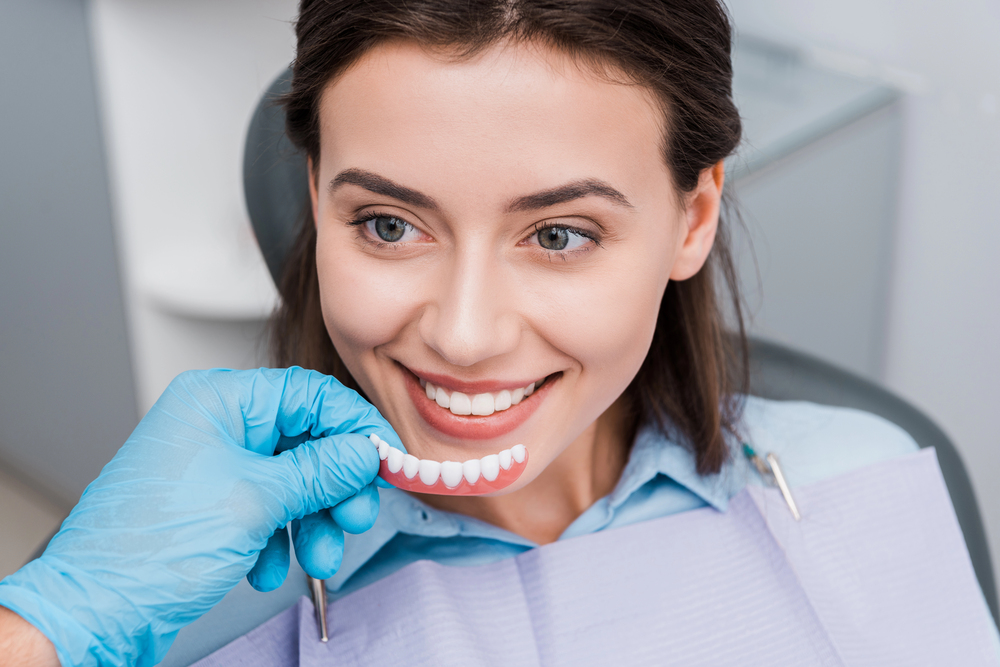
A denture that clicks firmly onto implants behaves very differently from one that rests on gum tissue alone. That's the core of snap-in dentures: we place a small number of dental implants in the jawbone, attach connectors to them, and fit your denture with matching housings so it snaps securely into place and lifts out when you want to clean it. For patients from The Villages who have spent years adjusting a lower denture at the dinner table or relying on adhesive to get through a round of golf, that single mechanical change — anchored instead of floating — is usually what they came looking for.
Snap-in dentures, also called implant-supported overdentures, combine two things we already do under one roof at Ocala Dental Care. Our periodontal side places implants; our prosthodontic side designs and builds complete and partial dentures. Because both happen here, and because we have an on-site dental lab, the denture and the implants are planned together rather than handed between offices.
A conventional denture gets its retention from suction and the shape of your ridge. That works reasonably well on an upper arch and far less reliably on a lower one, where the tongue and jaw muscles work against it. Snap-in dentures bypass that problem. The implants fuse with bone and carry the load, so the appliance stays put while you talk, laugh, and chew. You still remove it at night for cleaning, which many patients prefer over a fixed bridge they can't take out.
For patients who want something permanently anchored, we also offer All-on-4, full-arch implants, fixed implant-supported bridges, and Teeth in a Day. Snap-in dentures sit in the middle: more stability than a traditional denture, typically fewer implants than a fixed full-arch restoration.
Most adults missing all or most teeth in an arch are worth evaluating. We see candidates from The Villages in a few recurring situations: long-time denture wearers whose ridges have resorbed and whose appliance no longer fits, patients facing full-arch extractions because of advanced gum disease, and people who have an acceptable denture but can't keep the lower one seated.
Candidacy comes down to bone and health. We take images, review your medical history and medications, examine your existing denture if you have one, and measure the available bone height and width at proposed implant sites. If there isn't enough bone, that's not automatically a no — we perform bone grafting and sinus lift surgery, and many patients proceed after a healing period. If periodontal disease is active, we treat it first with scaling and root planing or periodontal therapy. Where teeth still need to come out, we handle simple and surgical extractions ourselves.
- A secure fit that doesn't depend on adhesive
- Implants that help preserve jawbone where teeth were lost
- A removable design you can clean thoroughly each night
- Chewing stability for a wider range of foods
- Repairs, relines, and adjustments handled in our own lab
How Treatment Unfolds
Treatment starts with a consultation and imaging, followed by a written plan covering implant number, position, and the denture design. Implant placement is a surgical appointment; we offer nitrous oxide and oral sedation, and we'll discuss which is appropriate for you. Afterward, implants need time to integrate with bone, and we'll usually keep you in a temporary or modified existing denture during that stretch.
Once healing is confirmed, we attach the connecting abutments and take records for the final denture. Our lab fabricates it, and we deliver it with the attachment housings processed into the base. The first few weeks involve small adjustments — bite refinements, sore-spot relief, occasionally changing the retention inserts if the snap feels too tight or too loose. We'd rather see you for a short visit than have you live with a rub.
Aftercare, Cost, and Scheduling From The Villages
Daily care means removing the denture, brushing it, and cleaning around the implant attachments with a soft brush. The attachment inserts are wear items and get replaced periodically — that's routine implant maintenance, which we provide. Plan on regular exams and hygiene visits so we can check the implants, tissue, and fit, and complete an oral cancer screening.
We accept all major PPO insurance plans, file claims as a general practitioner, welcome self-pay patients, and offer flexible payment plans so treatment can be staged over time. No referral is needed. We've cared for Marion and Sumter County families for more than 30 years, and we schedule Villages patients in longer, combined appointments where possible to reduce the number of trips. Emergency appointments are available, including denture repairs through our lab. Call us to arrange a consultation with Dr. Salifu or Dr. Geris.