
Services
Crowns
We restore damaged teeth with durable crowns, crafted in our on-site lab for same-day results.

Why choose us
Benefits of Crowns
Same-Day Crowns Possible
Our on-site dental lab lets us craft many crowns right here, often in a single visit.
Protection For Weak Teeth
A crown covers a cracked, worn, or heavily filled tooth so you can chew with confidence again.
Natural-Looking Results
We shape and shade each crown to blend in with the teeth around it.
Care For Every Age
We treat children and adults, and we welcome emergency appointments when a tooth breaks unexpectedly.
Flexible Ways To Pay
We accept all major PPO plans, self-pay patients, and offer flexible payment plans.
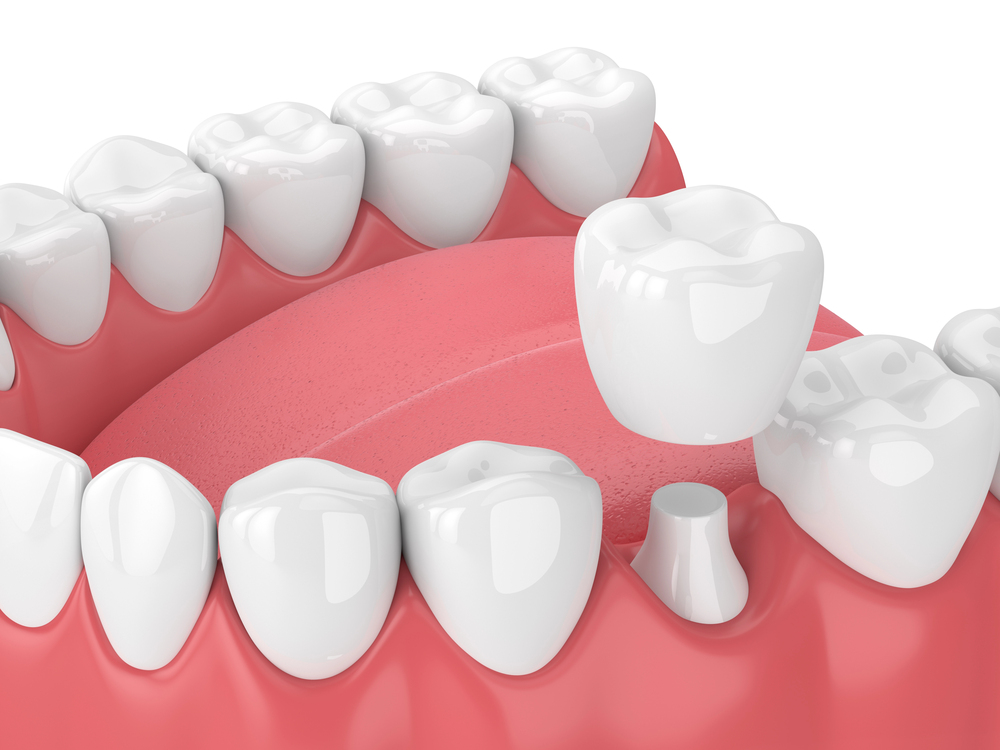
A tooth that cracks on a popcorn kernel, an old silver filling that finally gives way, or a molar that aches after years of grinding — these are the moments when a filling is no longer enough and a crown becomes the better answer. A crown is a custom-made cap that covers the entire visible portion of a tooth, restoring its shape, strength, and appearance while protecting what remains of the natural structure underneath. For more than 30 years, we've been placing crowns for families here in Ocala, and our on-site dental lab means many of our patients leave with a finished crown the same day.
A crown works like a protective helmet for a tooth that can no longer hold up on its own. When decay or a fracture removes too much of the tooth, a filling only patches the hole — it doesn't hold the remaining walls together. A crown wraps around the tooth and redistributes the force of chewing, which is why we so often recommend one after root canal therapy, after a large old filling breaks down, or when a tooth has a visible crack line running across it.
We also use crowns in situations that have nothing to do with damage. A tooth that is badly discolored, misshapen, or worn short from years of grinding can be rebuilt to match the rest of your smile. Crowns serve as the anchors for a dental bridge, and they sit on top of dental implants to complete tooth replacement. In full mouth rehabilitation cases, crowns are often the building blocks that restore comfortable chewing and a natural bite across the whole arch.
Most people who need a crown already suspect something is wrong — sensitivity to cold, a sharp twinge when biting down, or a rough edge the tongue keeps finding. Others learn about it during a routine exam, when we spot a hairline fracture or recurrent decay beneath an existing restoration. We take time to explain what we see and why a crown is the recommendation rather than a simpler fix, and we'll tell you honestly when a tooth can be conserved with a filling or an onlay instead.
Preparing a tooth for a crown involves gently reshaping it so the crown fits over it with the right thickness and contour, then capturing a precise record of the tooth and your bite. Because we have a dental lab in our own building, we can often design and fabricate the crown while you're here, which spares many patients the temporary crown and the second appointment. For patients who are anxious about dental work, we offer nitrous oxide sedation and oral sedation to make the visit easier. We see all ages, and we accept patients from Belleview, Silver Springs, Summerfield, The Villages, Dunnellon, Lady Lake, Marion Oaks, and the surrounding Marion County communities.
Situations where a crown is commonly the right choice include:
- A tooth that has had a root canal and needs full coverage to resist fracture
- A cracked tooth or one with a large, failing filling
- Significant wear from nighttime grinding or an uneven bite
- A single dental implant that needs a natural-looking chewing surface
- Support teeth on either side of a bridge
- A discolored or misshapen tooth in the smile zone
Living With Your Crown
A new crown usually feels slightly different for a day or two while your mouth adjusts. Mild sensitivity around the gum line is common and typically settles down. If your bite feels high or you notice the crown hitting first when you close, let us know — a small adjustment makes a real difference in comfort and in how long the restoration lasts.
From there, caring for a crown is refreshingly ordinary. Brush twice a day, clean carefully between the teeth where the crown meets the gum, and keep up with professional cleanings so the tooth and gum underneath stay healthy. If you grind your teeth, we may recommend a night guard to shield the crown from the same forces that damaged the original tooth. Avoiding ice and hard candy helps too.
Insurance, Payment, and Scheduling
We accept all major PPO insurance plans and file claims for you, and we welcome self-pay and cash patients. For treatment that falls outside what insurance covers, we offer flexible payment plans so cost doesn't stand between you and a tooth that needs protecting.
If a tooth is cracked, sore, or simply not holding up anymore, we'd be glad to take a look and talk through your options. Call our Ocala office to schedule — and if you're in pain, ask about an emergency appointment.
The process
What to expect
- 1
Exam And Planning
We examine the tooth, talk through your options, and decide if a crown is the right fit.
- 2
Shaping And Placement
We prepare the tooth and fit your crown, using our in-house lab to keep things moving quickly.
- 3
Follow-Up Care
We check your bite and comfort, then help you keep the crown healthy at future cleanings.