
Bridges in Silver Springs
A missing molar can seem manageable at first. You chew on the other side, you get used to it, and months pass. Then the tooth behind the gap starts to tilt, the tooth above it drifts down, and food packs into spaces that never used to exist. This is the point where many of our Silver Springs patients call us — not because of pain, but because the bite has quietly changed. A dental bridge is one of the most straightforward ways to close that gap and restore normal chewing before neighboring teeth shift further.
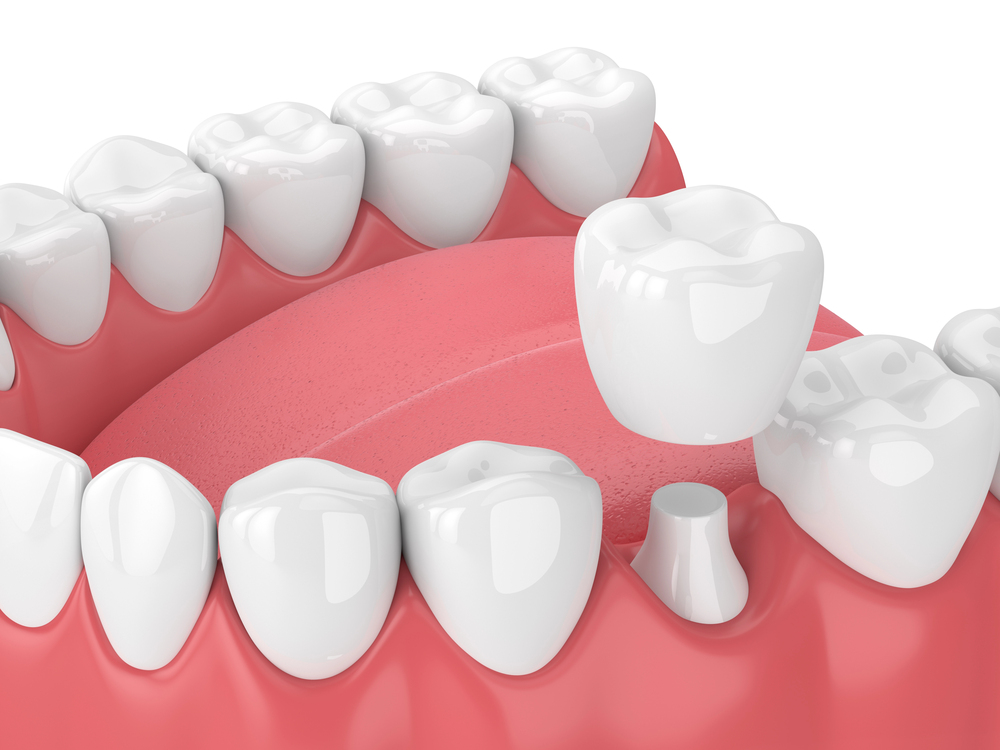
A bridge replaces one or more missing teeth by anchoring a replacement tooth, called a pontic, to support on either side of the space. In a traditional bridge, that support comes from the two adjacent teeth, which are shaped and fitted with crowns. The crowns and the pontic are fused into a single unit, so the restoration is fixed in place — it does not come out for cleaning the way a partial denture does.
We also provide implant-supported bridges, which use dental implants rather than natural teeth as the anchors. That option is useful when the neighboring teeth are healthy and untouched, or when several teeth in a row are missing and there isn't enough natural support available. Because we place dental implants here and also handle bone grafting and sinus lift surgery when the jaw needs preparation first, Silver Springs patients can usually stay with one team from the planning stage through the final restoration instead of being sent elsewhere mid-treatment.
Most candidates for a bridge have one to three teeth missing in a row, with sound, stable teeth on both sides of the gap. Healthy gums matter here. If gum disease is present, we treat it first — through scaling and root planing, gum disease treatment, or periodontal care — because a bridge built over inflamed tissue will not hold up. Sometimes a supporting tooth needs root canal therapy or crown lengthening before it can carry a crown, and we handle those steps in-house as well.
Bridges tend to suit people who want a fixed solution and prefer not to deal with a removable appliance. If an implant isn't possible due to bone volume, or if someone would rather not pursue surgery, a traditional bridge is often the practical choice. Here is what patients commonly gain:
- Restored ability to chew comfortably on both sides
- Support that keeps adjacent teeth from drifting or tilting into the gap
- A replacement tooth that matches the shade and shape of surrounding teeth
- A fixed restoration with no nightly removal
- More even distribution of bite forces across the arch
The Process, Start to Finish
Treatment begins with an exam, imaging, and a discussion of the alternatives — a bridge, an implant, or a partial denture — so you understand the tradeoffs before anything is prepared. At the first working appointment, we numb the area and reshape the supporting teeth so the crowns will fit over them. We then take impressions or digital scans and place a temporary bridge so you leave with the gap covered.
Our on-site dental lab is a real advantage at this stage. Fabrication and adjustments happen in our building rather than at an outside lab, which shortens waiting periods and makes shade or fit corrections faster to resolve. At the fitting visit, we check the margins, the contacts with neighboring teeth, and the way the bridge meets your opposing teeth, then cement it once everything seats properly. For patients who feel uneasy about dental work, nitrous oxide sedation and oral sedation are available.
Caring for a Bridge Long Term
Daily cleaning under the pontic is the single most important habit. Because the bridge is one connected unit, floss will not pass between the crowns, so we show you how to use a floss threader or interdental brush to clean beneath the replacement tooth. Our hygienists go through this with you at the delivery appointment and again at cleanings.
Regular exams let us check the cement seal, the supporting teeth, and the gum line around the margins. Decay at the edge of a crown is the most common reason a bridge eventually needs replacing, and it is far easier to address early. We see all ages, so families in Silver Springs can schedule checkups together.
Insurance, Payment, and Scheduling
We accept all major PPO insurance plans and file claims as a general practice. Many plans cover a portion of bridge treatment, and we will verify your benefits and give you a clear cost breakdown before you commit to anything.
We also welcome self-pay and cash patients, and we offer flexible payment plans to spread treatment costs out. Ocala Dental Care has served this area for over 30 years, and Silver Springs patients are seen by Dr. Hussein Salifu and Dr. Marco Geris without a referral. If a tooth breaks or a bridge comes loose, emergency appointments are available.